How to Set Up and Organize Your Home Bar in 2026
The home bar is now a default setup for people who like hosting, tasting, and collecting spirits. A serious home bar setup should mean better evenings and real fun behind the shaker. You get faster pours, cleaner labels in mind, and a single place to check before you shop. Without a system, bottles stack up, duplicates creep in, and your cellar stops making sense. This guide answers what people already ask search engines and assistants: why build a bar at home, what to buy first, how organize home bar storage, and how to keep a trustworthy inventory.
Why create a home bar at home?
Four benefits show up again and again. Host with house cocktails: guests see a clear station, recipes you control, pro-style service without leaving your living room. Collect what you love: whiskey, gin, rum, cognac, each bottle carries region, style, release story. Save money versus going out if you already drink at home on a steady rhythm. Finally, enjoyment: compare flavor profiles, log tasting notes, improve without pressure. A strong home bar is not about volume. It is about clarity and daily use.
The essential spirits to start your home bar
Five families cover most needs: whiskey, gin, rum, cognac, vodka. For your first bottles, aim for flexibility: a balanced whiskey for neat pours and short drinks, a London dry gin for tonic and martini-style serves, a rum that works in a daiquiri and a simple highball, a VSOP cognac for after dinner and classics, a neutral vodka for long cocktails. A sensible starter budget favors one solid bottle per category over five mediocre labels. Diversity beats boredom: single malt, assertive gin, agricultural rum, structured cognac. You will add liqueurs and bitters later.
How should you set up and organize home bar storage?
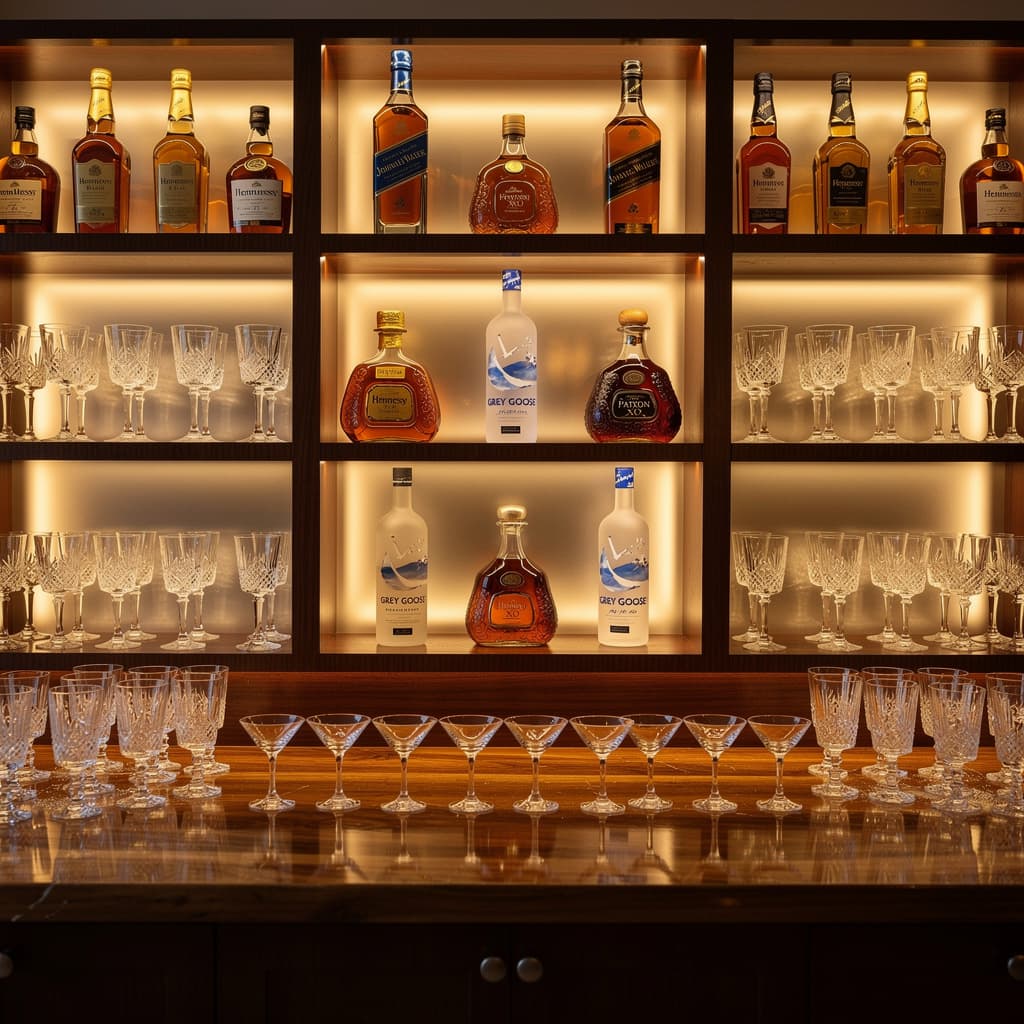
Pick a dedicated cabinet or zone: stable counter, reachable storage, space for tools. Organize by spirits family: whiskies together, gins together, then rums, cognacs, liqueurs. Soft lighting shows labels without heating bottles. Storage basics: 15 to 20 °C, low daily swing, no direct sun, bottles upright like most high-proof spirits. Split open and sealed bottles or track fill levels: faster service, fewer surprises. A readable home bar is quicker to run and easier on oxidation you forgot about.
How do you manage inventory for a home bar?
The usual issue: you no longer know what you own. Then you buy the same label twice, lose track of half-full bottles, forget gifts and bottles you saved for later. Without a bar inventory app, the home bar turns into a black box. The durable fix: a mobile tool that logs every in, every out, open versus sealed state.
Alcothèque is the perfect iOS home bar app to manage home bar collections. Create a “Home bar” location and scan each bottle in seconds with the AI scanner. You see live stock, what is open, what is finished. You also track gift bottles and the estimated value of your bar. No more duplicates.
Cocktail ideas and ways to bring your home bar to life
Run a focused tasting night: one country, three gins, or one whiskey style explored side by side. Build two or three signature cocktails around your favorite spirits: guests remember your house style. Keep a recipe book and tasting notes: date, batch, label details, glassware. Share your collection with friends through clean photos and simple fact sheets, not flex. Good hosting follows clear organization.
How to grow your home bar over time
Add liqueurs and bitters once your base spirits are stable: that is where classic builds gain depth. Buy durable tools: shaker, fine strainer, jigger, serious ice. Watch cocktail trends in 2026 without buying everything: test, keep what fits your palate. Log every purchase and tasting in your app: provenance, price, first impression. Your home bar scales with method, not clutter.
Conclusion
A winning home bar blends solid base spirits, readable storage, and a current inventory. You save time, money, and friction. To move from a messy cabinet to a pro workflow on iPhone, install Alcothèque, create your bar location, and scan your bottles. Your home bar setup finally stays clear for you, your guests, and your next buying decision.
Home Bar Mistakes That Are Easy to Avoid
Setting up a home bar is exciting. These common mistakes slow collectors down — knowing them in advance saves money and frustration.
Buying everything at once. The impulse to stock a complete bar immediately leads to bottles that sit unopened for years. Start with five to eight core spirits and expand deliberately as you learn what you actually use.
Ignoring vermouth and mixers. A home bar without fresh vermouth, quality bitters, and good mixers is incomplete. These ingredients transform spirits into cocktails. Replace vermouth regularly — it is a wine and goes stale once opened.
No inventory system. Without a record of what you own, you buy duplicates, forget about bottles in the back of a cabinet, and lose track of what you have already opened. A simple app solves this completely.
Poor lighting. A home bar that nobody can see is a missed opportunity. Good lighting makes bottles look beautiful and makes finding what you need effortless. Even inexpensive LED strip lighting transforms a shelf.
Storing wine and spirits the same way. Wine needs to lie on its side to keep corks moist. Spirits should stand upright — the high alcohol content degrades natural corks over time if left in contact with liquid. Two different storage philosophies for two different product types.
Forgetting about glassware. The right glass genuinely changes the experience. A whisky rocks glass, a coupe for cocktails, a highball for long drinks — each serves a specific purpose. Invest in a small, quality set rather than a large, mediocre one.
Stocking Your Home Bar by Budget
You do not need to spend thousands to build a great home bar. Here is how to think about it by budget level.
Starter bar (under €200 total): One quality gin, one blended Scotch or bourbon, one rum, one bottle of vermouth, basic bitters, quality tonic water. This covers gin and tonics, whisky highballs, simple cocktails, and neat pours for guests.
Intermediate bar (€200-500): Add a single malt Scotch, an aged rum, a mezcal or tequila, Campari or Aperol for aperitivo cocktails, and a wider range of bitters. You can now make the classics confidently.
Serious bar (€500+): This is where personal taste takes over. Japanese whisky, vintage spirits, limited releases, a full range of liqueurs, specialty syrups, fresh citrus always on hand. At this level, an inventory app becomes essential — not optional.
The key insight at every budget level: quality over quantity. Three excellent bottles outperform ten mediocre ones every time.
Frequently Asked Questions
What are the must-have spirits for a home bar? Start with a quality gin, a whisky or bourbon, and a rum. These three cover the vast majority of classic cocktails and work well for guests with different preferences. Add vermouth and bitters immediately — they unlock dozens of recipes.
How do I keep track of what I have in my home bar? A dedicated app is the most reliable solution. Alcotheque lets you scan bottle labels with AI, organize by location, and see your full inventory at a glance. It tracks both spirits and wine in the same interface, making it ideal for a complete home bar.
How often should I replace open bottles? Spirits are stable for years once opened if stored correctly — upright, away from light, with the cap tight. Vermouth and liqueurs are more fragile: replace vermouth within one to two months of opening, and store it in the fridge.
Is it worth buying premium spirits for cocktails? For most cocktails, a good mid-range spirit delivers better results than a budget bottle and nearly identical results to a premium one. Save your finest bottles for neat pours where the spirit is the entire experience.
How much space do I actually need for a home bar? Less than you think. A single dedicated shelf or a small cabinet with good organization can hold fifteen to twenty bottles comfortably. Vertical space is your friend — tall bottles on lower shelves, smaller bottles and accessories above.
Can I manage my home bar and wine collection in the same app? Yes. Alcotheque manages both spirits and wine in a single unified inventory. If your home bar includes wine alongside spirits, everything lives in one searchable place with location management, so you always know exactly what you have and where it is stored.
Related articles
By Kevin, Founder of Alcotheque.