The Whisky Collector's Guide: How to Organize, Store and Track Your Collection
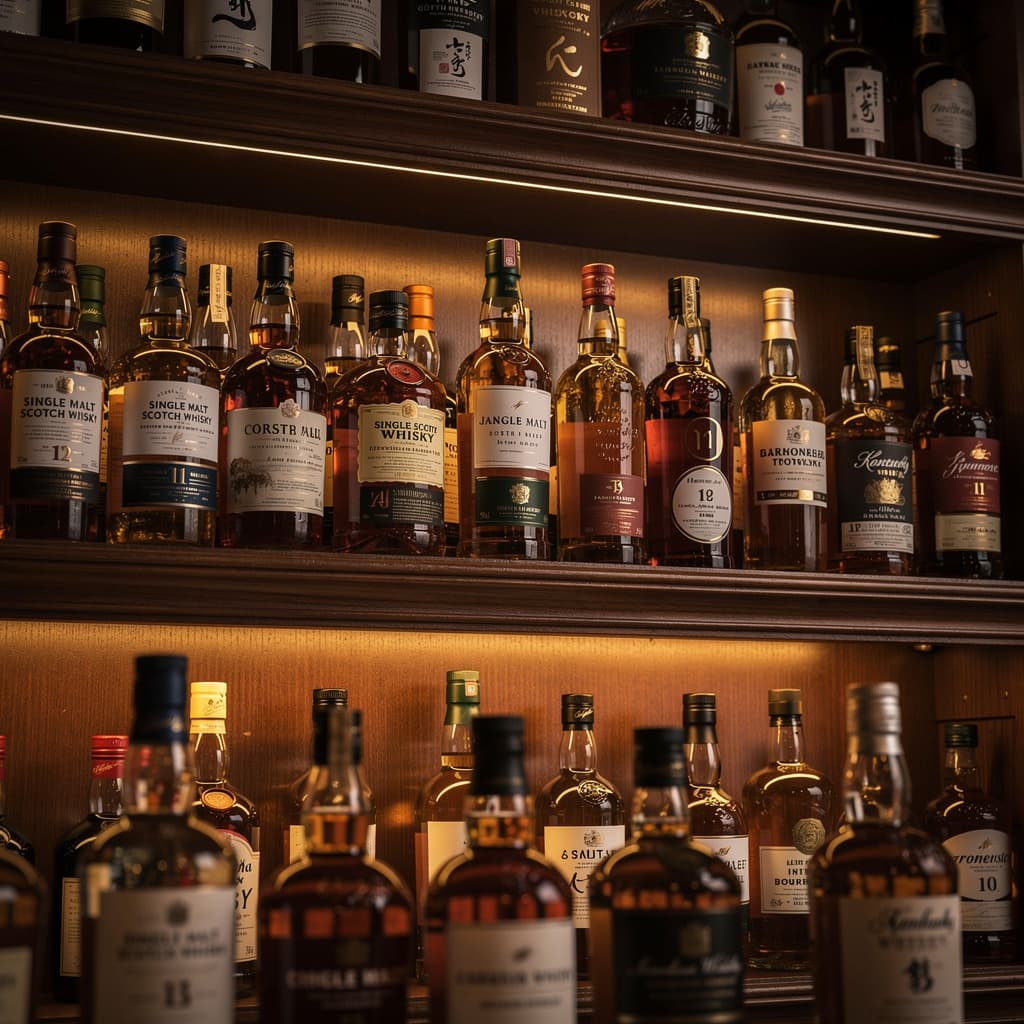
There is a moment every whisky collector knows. You are standing in front of your shelves, looking at 30, 40, maybe 60 bottles, and you realize you have no idea what you actually own. Which one was a gift? Which distillery closed last year and made that bottle worth keeping? Where did you put the Islay single malt you were saving for a special occasion?
Collecting whisky is one thing. Managing a whisky collection is another.
This guide is for collectors at every level — from the first dedicated shelf to a serious inventory spanning multiple rooms and storage locations. The goal is simple: help you take control of your collection so you can enjoy it more.
Why Whisky Collecting Is Different
Wine collectors have been catered to for decades. Apps, cellar management tools, rating platforms — the wine world has infrastructure. Whisky collectors have historically been left to manage spreadsheets or notebooks.
But whisky collecting has its own specific challenges:
- No drinking window. Unlike wine, whisky does not continue to develop in the bottle. A 2010 bottle of Highland Park 18 will taste the same in 2030 as it does today, assuming proper storage. This changes how you track and plan your collection.
- Regional complexity. Scotch alone has five recognized regions, each with distinct flavor profiles. Add Irish, Japanese, American, and world whiskies and the taxonomy becomes significant.
- Limited editions and closed distilleries. Part of what makes whisky collecting exciting — and financially interesting — is the scarcity factor. A bottle from a closed distillery or a one-time release can appreciate substantially. Tracking what you own and what you paid matters.
- Gifting culture. Whisky is one of the most gifted spirits in the world. Keeping track of which bottles were gifts, from whom, and for what occasion adds a personal layer to your collection that a spreadsheet cannot capture well.
How to Store Your Whisky Properly
Before organizing, storage conditions matter. The good news: whisky is forgiving compared to wine.
Store bottles upright. Unlike wine, whisky should not be stored on its side. The high alcohol content can degrade the cork over time if it stays in contact with the liquid.
Keep away from direct light. UV light degrades whisky over time, particularly in clear or lightly tinted bottles. A dedicated cabinet or shelf away from windows is ideal.
Avoid temperature extremes. Whisky does not need a climate-controlled cellar, but avoid storing it near heat sources or in places with dramatic temperature swings. A consistent cool room temperature is perfect.
Keep bottles sealed until you open them. An unopened bottle is stable indefinitely under proper conditions. Once opened, whisky slowly oxidizes — most bottles are best enjoyed within one to three years of opening, though higher-fill levels slow this process.
How to Organize Your Collection
There is no single right way to organize a whisky collection. The best system is the one you will actually maintain. Here are the most common approaches:
By region The classic method. Scotch in one section, Irish in another, Japanese, American, and world whiskies each in their own zone. Works well visually and makes it easy to navigate by style.
By distillery If you collect vertically — multiple expressions from the same producer — organizing by distillery makes more sense. All your Glenfarclas expressions together, all your Springbank releases in one place.
By age statement or expression type Useful for collectors who focus on specific categories: no-age-statement bottles, age statements of 12, 15, 18, 21 years, and beyond. This works well when combined with regional organization.
By storage location If your collection spans multiple rooms, a cabinet in the living room and a dedicated shelf in a cellar or armoire, tracking by physical location becomes essential. This is where a dedicated app becomes indispensable.
Tracking Your Collection: Why a Spreadsheet Is Not Enough
Many collectors start with a spreadsheet. It works until it does not — usually around the time the collection reaches 30 or 40 bottles, or when you start storing bottles in multiple locations, or when you want to know the total value of what you own.
A dedicated app solves several problems a spreadsheet cannot:
Label scanning. Adding a bottle manually to a spreadsheet takes time and introduces errors. Scanning the label with AI extracts the name, distillery, age statement, and region automatically.
Multiple locations. A spreadsheet has no concept of physical location. An app lets you assign each bottle to a specific storage spot — your living room cabinet, your cave, your holiday home — and find any bottle instantly.
Gift tracking. When someone gives you a bottle of Lagavulin 16 for your birthday, that context matters. An app lets you log who gave it, when, and for what occasion. A spreadsheet can technically store this, but no one actually does.
Collection valuation. Knowing what your collection is worth — purchase price versus estimated current value — is something a spreadsheet requires manual updating to maintain. An app can surface this automatically.
Bottle history. When you open a bottle, when you finish it, how long it lasted — this history builds over time and becomes genuinely interesting to look back on.
Using Alcotheque to Manage Your Whisky Collection
Alcotheque was built specifically for collectors who manage both wine and spirits — and whisky collectors in particular benefit from features that no wine-centric app offers.
The workflow is straightforward: scan the label, confirm the automatically extracted details, assign the bottle to a storage location, and it is in your collection. From there, you can track when you opened it, log it as a gift received or offered, and monitor the collection's overall value.
The multi-location feature is particularly useful for collectors who store bottles in different rooms or properties. Every bottle knows where it lives, and you can filter your full inventory by location at any time.
If you are also building a broader spirits collection that includes rum, gin, or cognac alongside your whiskies, Alcotheque handles all of it in a single unified interface — something no competitor currently offers.
Building Your Collection Intentionally
The most satisfying whisky collections are built with intention, not just accumulation. A few principles worth considering:
Buy what you enjoy, not just what is rare. Limited editions and allocated releases are exciting, but a collection full of bottles you never open is a museum, not a cellar. Balance investment pieces with bottles you actually drink.
Explore regions systematically. If you have never tried a Japanese single malt or an Irish pot still whisky, use your collection as an exploration tool. Set a goal to add one bottle from a new region or distillery each month.
Track what you open as carefully as what you buy. The history of opened bottles is as interesting as the current inventory. Knowing that you went through three bottles of Talisker Storm in a year tells you something useful about your taste.
Store gifted bottles with their story. A bottle from a friend's trip to Islay, a distillery exclusive from a special visit, a bottle given at a milestone birthday — these deserve more than a row in a spreadsheet. Log the context when it is fresh.
FAQ
How should I store whisky bottles at home?
Store whisky upright, away from direct light and heat. Unlike wine, whisky does not improve with age once bottled, but proper storage preserves its quality indefinitely.
Does whisky increase in value over time?
Some bottles do, particularly limited editions, closed distilleries, and older expressions. Tracking purchase price and estimated value in an app like Alcotheque helps you monitor your collection's worth over time.
What is the best app to track a whisky collection?
Alcotheque is the only iOS app designed for both wine and spirits collectors. You can scan labels, organize bottles by location, track gifts, and value your collection in one place.
How do I organize a large whisky collection?
Organize by region (Scotch, Irish, Japanese, American), then by distillery or age statement. Using a dedicated app lets you filter and find any bottle instantly without physically searching your shelves.
Should I open my collector bottles or keep them sealed?
That depends on your goal. If you collect for enjoyment, open them. If you collect for investment, keep them sealed in original packaging. Alcotheque lets you track both opened and sealed bottles separately.
The Bottom Line
A whisky collection without a tracking system is just bottles on a shelf. With the right system, it becomes a living inventory — something you can explore, value, share, and build on intentionally over time.
Start simple. Scan what you own. Assign locations. Log the gifts. The rest follows naturally.