
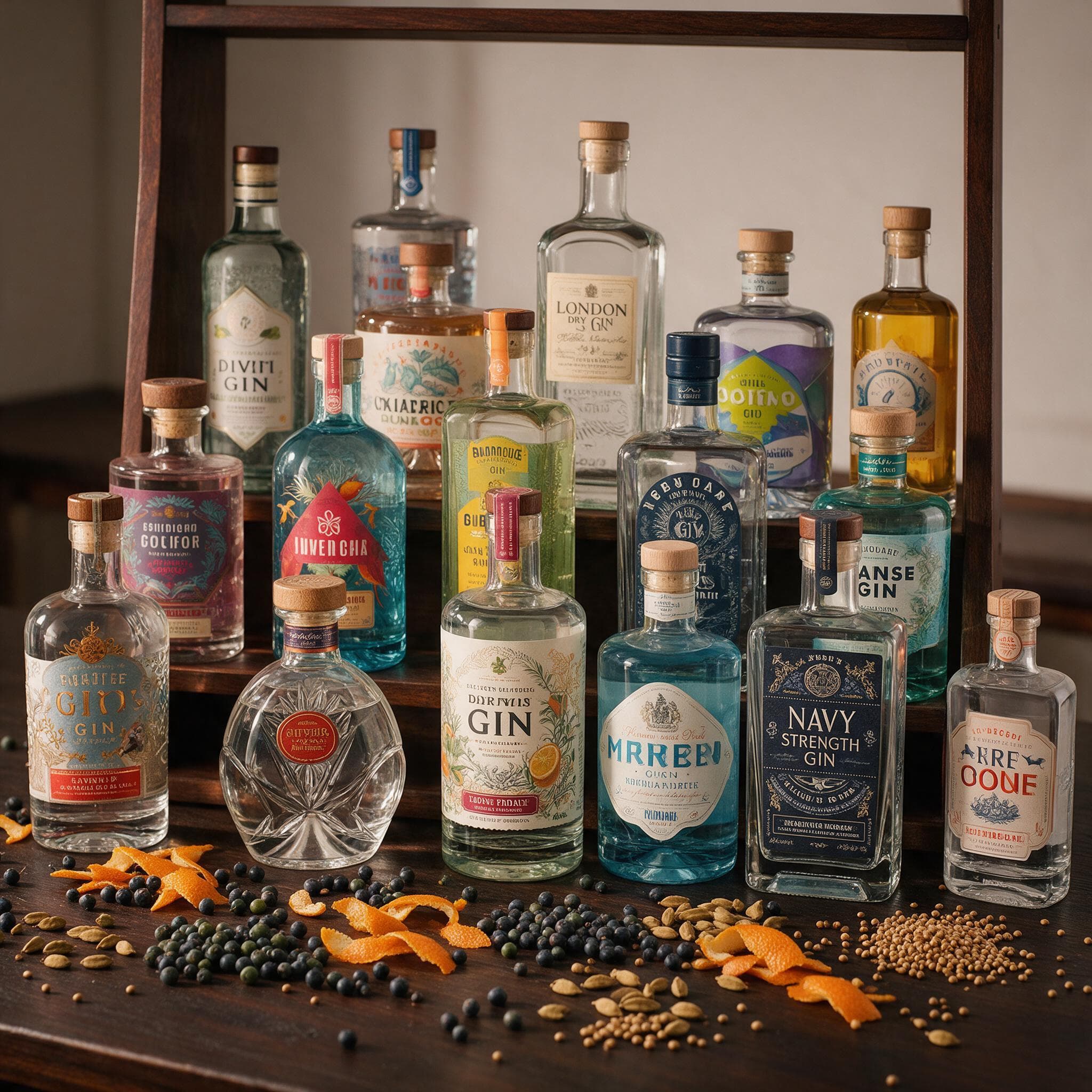
Gin Collection Insights: What Your Bottles Really Tell You
Most people who collect gin know what they like. A contemporary gin with unexpected botanicals that surprised them at a bar. A classic London Dry from a distillery they visited. A navy strength that changed how they thought about the category. The bottles accumulate, the shelf fills up, and at some point the collection becomes genuinely interesting.
But do you know what patterns it reveals?
Not just the names. The data underneath. Which styles dominate your shelf. Whether your distillation method preferences are consistent or scattered. How many of your gins share the same key botanical. What your collection says about you as a collector.
That is the difference between a shelf of gin and a gin collection with meaning.
Why Gin Is the Most Complex Spirit to Categorize
Whisky has regional rules. Rum has production philosophies. Cognac has appellation law. Gin has almost none of that, and the freedom is both its greatest strength and its biggest challenge for collectors.
Two bottles both labeled "gin" can share almost nothing in terms of production philosophy, flavor profile, or intended experience. A classic London Dry from a traditional house and a contemporary gin using vapor infusion with locally foraged botanicals are essentially different spirits that happen to share a legal definition.
This complexity is why the data matters more for gin than for almost any other spirit. Without tracking the underlying metadata, a gin collection is just names on a shelf. With it, patterns emerge that change how you buy, how you organize, and how you understand what you have built.
The Gin Data That Actually Changes How You Collect
When Alcotheque scans a gin label, it extracts a complete metadata profile specific to the category:
Gin Style — London Dry, contemporary, navy strength, sloe, Old Tom, or genever. This single field tells you more about what is in the bottle and how it was made than almost anything else on the label. A London Dry has strict production rules. A contemporary gin has almost none. Knowing which you are dealing with changes every expectation you bring to the glass.
Distillation Method — pot still, column still, vapor infusion, or cold compound. The method is one of the most direct determinants of flavor character in gin, yet it is rarely disclosed on the label. Vapor infusion tends toward delicate, aromatic profiles. Pot still produces richness and body. Cold compound, which simply macerates botanicals in neutral spirit without redistillation, is the most controversial method and worth tracking specifically.
Base Spirit — grain, grape, potato, sugar cane, malt, rice, or apple. Most gins use a grain base, which produces a neutral foundation that lets the botanicals speak. But some of the most interesting gins use a grape base, a malt base, or even an apple base, and the character of that base spirit is always present in the final product, however subtly. This is one of the most underappreciated fields in the entire metadata set.
Key Botanical — the signature botanical that defines the gin's character. Juniper is legally required in gin, but it is not always the star. A gin built around Szechuan pepper, yuzu, cardamom, or violet root has a completely different identity. Tracking the key botanical across your collection reveals whether you have a genuine preference or a genuinely diverse shelf.
Botanicals — the full list of botanicals used. When this field is populated across your collection, you start to see which botanical combinations recur, which are genuinely unusual, and how your taste has evolved across purchases.
Rarity Score — a 0-100 indicator of how scarce the bottle is, based on production volume, distillery status, and release type. Useful for understanding which bottles in your collection warrant more careful consideration before opening.
Market Position — entry, mid-range, premium, ultra-premium, or collector. Useful for understanding the value distribution across your collection at a glance.
When all of these fields are populated across your collection, the insights that emerge are specific and often surprising.
What the Insights Actually Show You
Imagine looking at your gin collection and seeing:
- 70% of your bottles are contemporary style — you have almost no classic London Dry, which means an entire tradition of the category is missing from your shelf
- Every gin where you know the distillation method uses pot still or vapor infusion — you have never tried a gin made by cold compound, consciously or not
- Your key botanical field shows juniper, citrus, and floral notes dominating — you have a clear aromatic preference that you may not have articulated before
- Three of your twelve bottles come from the same distillery, which is not a problem but does suggest you are building a vertical collection without realizing it
- Your rarity scores cluster around 30 to 50 — you have a solid mid-range collection but nothing that would be difficult to replace
None of this is obvious from looking at labels. All of it becomes clear when the data is tracked systematically.
This is what the Spirit Insights section in Alcotheque surfaces for gin collectors. Not charts for their own sake, but a mirror of your collecting habits that suggests where to go next.
Understanding Gin Styles
The style field is the most important single data point in your gin collection, and it is worth understanding what each one actually means before building a collection around them.
London Dry is the most regulated style and the historical benchmark. All botanicals must be added during distillation. Nothing can be added after redistillation except water and a tiny amount of sweetener. The flavor must be predominantly juniper. Tanqueray, Beefeater, and Gordon's define the category, but some of the most interesting London Drys come from smaller producers who work within the constraints with genuine creativity.
Contemporary gin is everything that London Dry is not. No production rules beyond the legal minimum requirements for gin. Botanicals can be added at any stage. Any base spirit, any distillation method, any flavor focus. This freedom has produced some of the most exciting spirits of the past decade and also some of the most overrated. The style label tells you the rules were relaxed. The distillation method and botanicals tell you what the producer actually did with that freedom.
Navy strength is bottled at 57% ABV or higher, a nod to the historical standard of naval spirits. The higher alcohol content intensifies everything — the botanicals hit harder, the texture is denser, and the finish is longer. It is a genuinely distinct experience from standard strength gin and represents one of the most collectible substyles in the category.
Old Tom sits historically between genever and London Dry, slightly sweeter and softer than modern London Dry. It nearly disappeared in the twentieth century and has been revived by craft distillers interested in historical accuracy. Old Tom expressions from quality producers are among the most interesting gin bottles available for collectors who want something genuinely different.
Sloe gin is technically a liqueur made by macerating sloe berries in gin. It occupies its own niche and has very little in common with the other styles. Worth having in a collection but worth tracking separately.
The Distillation Method Nobody Talks About
Cold compound gin is gin made by simply adding botanical extracts or essences to neutral spirit, without any redistillation. It is the cheapest and quickest method and produces the least complex result. It is legal, widely used in mass-market products, and almost never disclosed on the label.
Tracking the distillation method in your collection is one of the most honest acts a gin collector can perform. Once you know that three of your bottles were made by cold compound, you understand why they taste the way they do. And once you have that context, you start making different decisions.
Alcotheque uses production knowledge to flag this where the information is available, even when the label is silent on the subject.
Building a Gin Collection Worth Tracking
Anchor in one style first. If you have never gone deep on classic London Dry, spend time there before expanding into contemporary. A collection of five serious London Drys from five different producers will teach you more about the category than twenty contemporary gins selected at random.
Diversify by distillation method. A collection of five vapor infusion gins is less interesting than one vapor infusion, one pot still, one column still, and one gin where you know the base spirit is unusual. Each represents a genuinely different production philosophy.
Track the key botanical deliberately. Once you have five or six bottles with the key botanical field populated, look at what you have. If juniper and citrus dominate, try a gin built around something entirely different. Cardamom, saffron, yuzu, or locally foraged botanicals from a specific region can completely reframe what the category is capable of.
Pay attention to the base spirit. If all your gins use a grain base, try one grape-based gin from a quality producer. The difference in texture and subtle flavor is more significant than most gin drinkers expect, and it opens a new dimension of the category.
Log the gifts. Gin is one of the most frequently gifted spirits, particularly at Christmas and birthdays. The gift tracking feature in Alcotheque lets you log who gave you a bottle, when, and for what occasion. Over time, your gift history becomes one of the most personal parts of your collection record.
The Botanical Map of Your Collection
One of the most genuinely useful insights Alcotheque generates for gin collectors is the botanical breakdown across the full collection. When the botanicals field is populated for most of your bottles, you can see:
Which botanicals appear most frequently — your botanical fingerprint as a collector.
Which combinations recur — the flavor profiles you return to without always realizing it.
Which botanicals are entirely absent from your collection — potential directions for future exploration.
Juniper is universal by law, but citrus peel, coriander, angelica, orris root, cardamom, cassia, and dozens of more unusual ingredients each contribute differently to the final spirit. A collection that has mapped its botanicals is a collection that understands itself.
FAQ
What is the difference between London Dry and contemporary gin?
London Dry gin must add all botanicals during distillation and cannot add anything after except water and a small amount of sweetener. Contemporary gin has no such restrictions, allowing producers to add post-distillation botanicals and flavors, enabling a much wider range of flavor profiles.
What distillation method produces the most complex gin?
Vapor infusion is often associated with the most delicate and aromatic gins, where botanicals are held in a basket above the spirit rather than submerged. Pot still produces richer, fuller gins. Column still tends toward cleaner, more neutral profiles. Each method produces a genuinely different result.
What is the best app to track a gin collection on iPhone?
Alcotheque is the only iOS app that tracks gin-specific metadata including style, distillation method, base spirit, key botanical, and rarity score. The AI extracts this data automatically from the bottle label.
What base spirit is used in gin?
Most gins use a grain base spirit, which produces a neutral, clean foundation. Some producers use grape, potato, apple, sugar cane, malt, or rice as their base, each contributing subtle character to the final spirit. The base spirit is one of the most underappreciated factors in gin flavor.
Is navy strength gin worth collecting?
Yes. Navy strength gins, bottled at 57% ABV or above, represent a distinct and increasingly collectible style. The higher strength intensifies the botanicals and changes the texture significantly. Limited release navy strength expressions from respected producers are among the most interesting gin bottles to collect.
The Bottom Line
Gin is the most diverse and the least self-explanatory major spirit category. Two bottles that both say "gin" on the label can share almost nothing in terms of production philosophy, flavor character, or collectibility.
Tracking the data underneath the label — style, distillation method, base spirit, key botanical, botanicals, rarity — is what transforms a shelf of interesting bottles into a collection that teaches you something every time you look at it.
Scan your first gin and let the data start building the picture.
