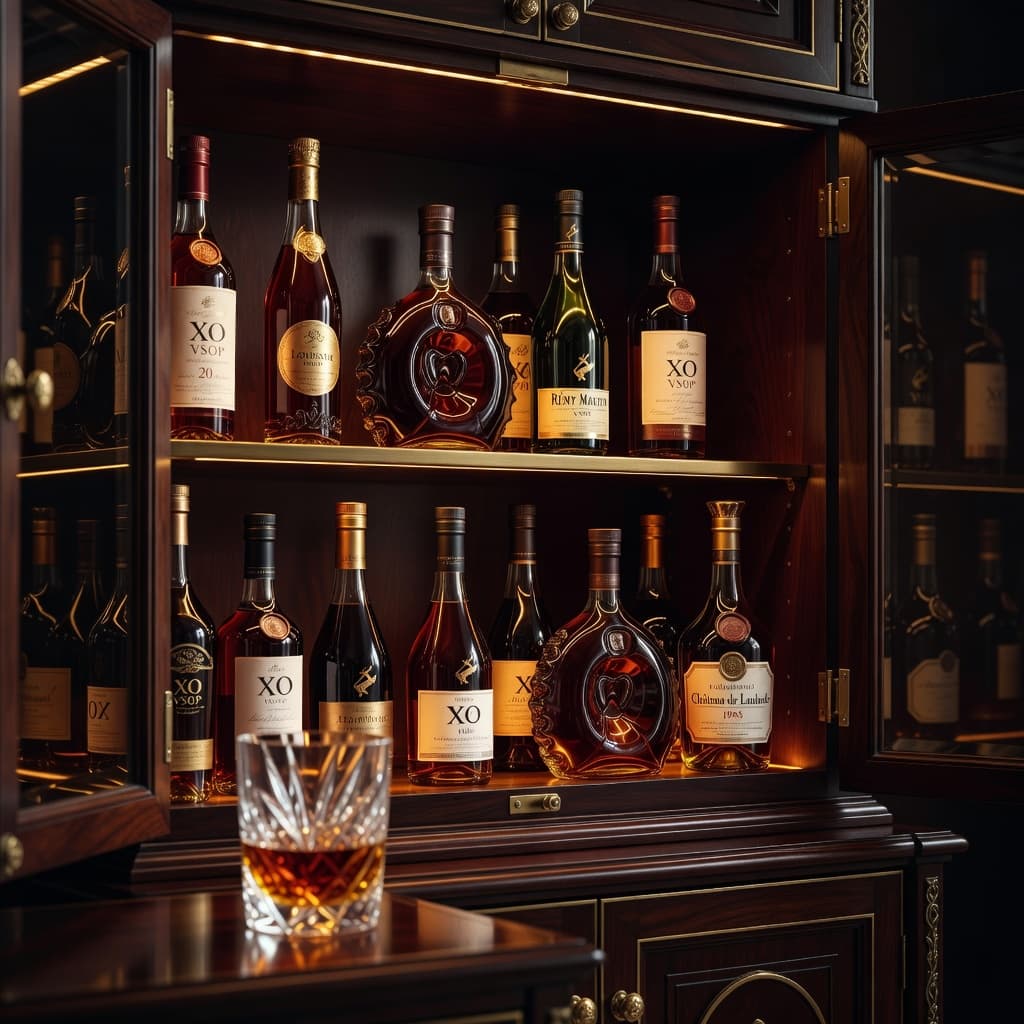
Cognac Collection Insights: What Your Bottles Really Reveal
Cognac is the most misunderstood collectible spirit in the world. Most people know the three letters — VS, VSOP, XO — but very few collectors understand what actually separates a remarkable bottle from a mediocre one. The appellation. The house philosophy. The region within the region. The decision to blend or release single-cru.
All of that information exists. Most of it is on the label, if you know how to read it. And when you track it systematically across your entire collection, something genuinely interesting emerges.
Why Cognac Is Worth Collecting Seriously
Cognac has a reputation problem among spirits collectors. It is seen as a luxury gift category, a status symbol, something you buy for someone else rather than something you build a collection around with intention. That reputation is undeserved.
The best cognacs are among the most complex and age-worthy spirits produced anywhere in the world. A Grande Champagne from a serious house, given 20 or 30 years in Limousin oak, develops a depth and aromatic complexity that rivals the finest whisky or Armagnac. The problem is that the category has been dominated by marketing — giant houses spending enormous budgets on bottle design and celebrity endorsements rather than educating collectors about what is actually in the glass.
Once you understand the underlying geography and production philosophy, cognac collecting becomes one of the most rewarding categories to explore — and one where knowledge genuinely creates an advantage.
The Cognac Data That Changes How You Collect
When Alcotheque scans a cognac label, it extracts a complete metadata profile specific to the category:
Appellation — VS, VSOP, XO, or Hors d'âge. These are legally defined minimum age requirements that tell you the youngest eau-de-vie in the blend. A house that releases an XO with an average age well above the legal minimum is making a very different product than one meeting the threshold precisely.
Region — Grande Champagne, Petite Champagne, Borderies, Fins Bois, Bons Bois, or blended. This is the single most important quality indicator in cognac and it is almost never discussed in mainstream coverage. The soil composition of each sub-region determines the aging potential and flavor trajectory of the eau-de-vie.
House — the producer. In cognac, the house philosophy matters enormously. Some houses blend hundreds of eaux-de-vie across regions and ages for consistency. Others release single-cru expressions that showcase terroir. Tracking which houses are represented in your collection tells you something important about your own collecting philosophy.
Market position — entry, mid-range, premium, ultra-premium, or collector. Useful for understanding the value distribution across your collection at a glance.
Average age — where disclosed. Not all houses are transparent about actual ages beyond the legal minimum, but tracking this where available adds meaningful context.
When these fields are populated across your collection, the insights that emerge are specific and actionable.
What the Insights Actually Show You
Imagine looking at your cognac collection and immediately seeing:
- 70% of your bottles are from three major houses — your collection reflects brand recognition more than terroir exploration
- You have no single-cru expressions — an entire dimension of cognac is missing from your shelf
- All your bottles are XO or above — you have never explored the value territory of well-aged VSOP from serious producers
- You have zero Armagnac — a category that offers more vintage transparency and often more complexity per euro than comparable cognac
None of this is obvious from looking at labels. All of it becomes clear when the data is tracked systematically.
This is what the Spirit Insights section in Alcotheque surfaces for cognac collectors — not generic charts, but a mirror of your collecting habits that suggests where to go next.
Understanding the Cognac Appellations
The six cognac crus are not equally collectible, and understanding the hierarchy is fundamental to building a serious collection.
Grande Champagne — the finest cru, covering roughly 34,000 hectares around the town of Segonzac. The chalky soil produces eaux-de-vie with exceptional floral character and the longest aging potential of any cognac region. The finest vintage releases from this appellation age for 40, 50, or even 60 years in barrel. If you are building a collection with investment potential, Grande Champagne single-cru expressions are where the serious money goes.
Petite Champagne — similar chalk soils to Grande Champagne but with slightly less aging potential. The famous Fine Champagne designation on a label means a blend of at least 50% Grande Champagne with the remainder from Petite Champagne — a reliable quality indicator available at more accessible prices.
Borderies — the smallest and most distinctive cru, known for a nutty, violet-tinged character that develops relatively quickly in barrel. Borderies-dominant expressions are rare and genuinely collectible precisely because of their scarcity and distinct flavor profile.
Fins Bois and Bons Bois — the larger crus producing faster-maturing eaux-de-vie. These form the backbone of most blended cognacs but are rarely the star of a serious collection. Understanding their presence in a blend helps you decode house style.
The House Question: Négociant vs. Independent
One of the most important distinctions in cognac collecting is between the major négociant houses and the smaller independent producers — and this maps directly onto a field Alcotheque tracks.
The four major houses — Hennessy, Rémy Martin, Martell, and Courvoisier — control the majority of global cognac sales. Their blends are consistent, well-made, and designed for broad appeal. They are not, by and large, what serious collectors focus on.
The more interesting territory is the smaller houses and independent bottlers: Hine, Delamain, Frapin, Pierre Ferrand, Grosperrin. These producers are more transparent about appellation, more likely to release single-cru expressions, and more willing to let age and terroir speak rather than packaging and marketing.
Tracking which houses appear in your collection over time reveals whether you are building something genuinely interesting or simply accumulating prestige labels.
Armagnac: The Collector's Secret
No guide to cognac collecting is complete without addressing Armagnac — and no Alcotheque collection of aged French brandy should ignore it.
Armagnac is produced in Gascony, south of Bordeaux, using a continuous distillation method that produces a more rustic and characterful eau-de-vie than the double distillation used in cognac. More importantly for collectors, Armagnac has a long tradition of vintage dating — something cognac almost never offers. A bottle labeled 1975 Armagnac means exactly that: a single harvest, distilled in 1975, aged in barrel for decades.
This vintage transparency is extraordinary in the aged spirits world and creates collecting opportunities that cognac simply cannot match. A 1975 Bas-Armagnac from a respected producer costs a fraction of what a comparable aged Scotch whisky would — and offers a flavor experience that is entirely its own.
Alcotheque tracks Armagnac alongside cognac under the same metadata framework, so collectors who explore both categories have a unified view of their aged French brandy collection.
Building a Cognac Collection Worth Tracking
Start with appellation, not brand. Before buying another bottle from a familiar house, find a single-cru Grande Champagne or Borderies expression from a smaller producer. The difference in character will immediately clarify what the terroir conversation is actually about.
Explore the VSOP tier from serious houses. The XO minimum age was raised to 10 years in 2018, which means the best VSOP expressions from quality producers — often with actual ages of 8 to 12 years — represent remarkable value. Tracking the actual house disclosures in your collection helps you identify which producers are most transparent.
Add at least one vintage Armagnac. A 20 or 30-year-old vintage Armagnac from Darroze, Grosperrin, or Delord will cost less than a mid-range XO cognac and deliver a flavor experience that is genuinely irreplaceable. Once it is in your collection and tracked in Alcotheque, you will understand immediately why the category deserves serious attention.
Track gifts carefully. Cognac is one of the most gifted spirits in the world — particularly at Christmas and for milestone occasions. Logging who gave you a bottle, when, and for what occasion adds a personal dimension to your collection that the gift tracking feature in Alcotheque was built to capture.
Watch the collection intelligence. As your cognac bottles accumulate data, the insights section will start surfacing patterns — which appellations dominate, how your market position distribution looks, which houses appear repeatedly. Use that data as a buying guide for what to explore next.
FAQ
What do VS, VSOP and XO mean on a cognac bottle?
These are legally defined age classifications. VS means at least 2 years in oak. VSOP means at least 4 years. XO means at least 10 years. Hors d'âge is an unofficial tier above XO used by prestige houses.
What is the most collectible cognac appellation?
Grande Champagne is considered the finest cognac cru, producing eaux-de-vie with the longest aging potential. A single-cru Grande Champagne from a respected house is the benchmark for serious collectors.
Is Armagnac worth collecting alongside cognac?
Absolutely. Armagnac is often more transparent about vintages and production methods than cognac. Vintage Armagnacs from the Bas-Armagnac appellation are among the most interesting aged spirits available at any price.
What is the best app to track a cognac collection on iPhone?
Alcotheque is the only iOS app that tracks cognac-specific metadata including appellation, house, region, age classification, and market position. The AI extracts this data automatically from the bottle label.
How should I store cognac bottles?
Store cognac upright, away from direct light and temperature extremes. Unlike wine, cognac does not evolve in the bottle once sealed. Opened bottles should be consumed within one to two years for best quality.
The Bottom Line
Cognac is a category where knowledge creates a genuine collecting advantage. Understanding the appellation hierarchy, the house philosophy, and the difference between a marketing-driven blend and a terroir-driven single-cru expression changes every buying decision you make.
Tracking that knowledge systematically — appellation, house, region, age classification, market position — is what transforms a shelf of impressive bottles into a collection with real coherence and direction.
Scan your first cognac and let the data start building the picture.