Alcotheque vs InVintory: Which Wine App Is Right for You?
InVintory has built one of the most impressive wine collection platforms available — Apple App of the Day, 4.8 stars from over 4,000 ratings, coverage in Wine Spectator and Decanter, and a 3D cellar visualization technology that genuinely has no equivalent in the market. If you take wine seriously, you have probably heard of it.
Alcotheque is a different kind of tool. Smaller, more focused, and built around a different collector profile — someone who manages wine and spirits together, wants a private inventory without the premium infrastructure, and values simplicity and AI scanning over architectural cellar management.
This comparison is honest. Both apps are good. The question is which one fits your actual collection.
What InVintory Is Built For
InVintory describes itself as the best wine inventory software, helping wine collectors track and find their bottles. That description understates what it actually does.
The standout feature is VinLocate — a proprietary 3D bottle-finding technology that lets you digitally recreate your physical wine cellar or fridge, assign bottles to specific slots, and then locate any bottle with a tap. If you have a serious wine infrastructure — a dedicated cellar, multiple wine fridges, hundreds of bottles across different storage — this is genuinely useful in a way that no list-based system can replicate.
The sommelier-managed database of over 1 million wines means the data quality is exceptionally high. Add to that an AI wine assistant called Vincent, real-time market valuation pulling from Liv-ex and Wine Labs, ideal drink windows, critic reviews from Robert Parker, James Suckling, Wine Spectator, and Decanter, and you have a platform that takes wine collecting seriously at every level.
InVintory tracks over 10 million bottles and $1 billion in wine value across more than 100,000 monthly active collectors. The scale is real.
What InVintory does not do officially: spirits. The FAQ is transparent about this — spirits are partially in the database because collectors have added them, but the platform is optimized for wine and officially expanding spirits support is on the roadmap rather than live.
What Alcotheque Is Built For
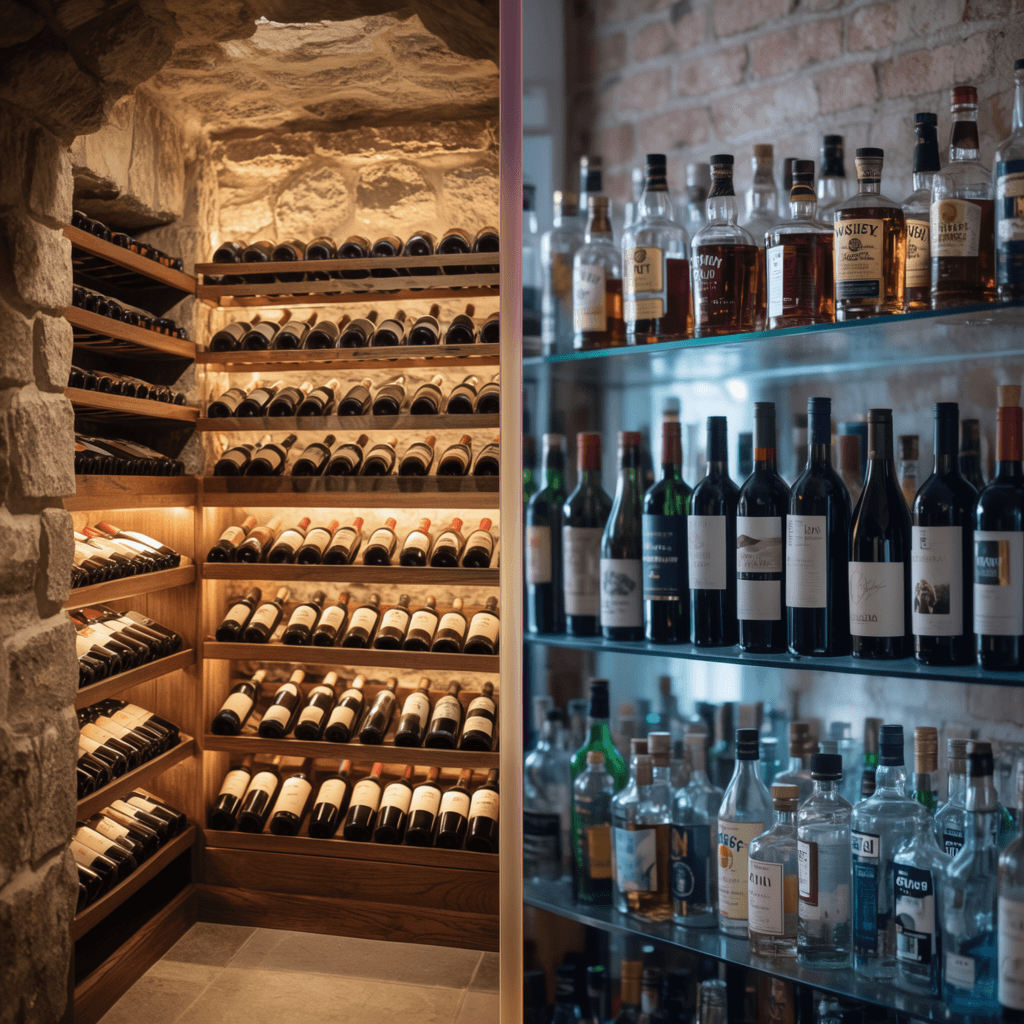
Alcotheque was built for a different kind of collector — someone who has bottles of both wine and spirits, does not have a dedicated cellar infrastructure, and wants a clean mobile-first inventory that stays private.
The AI label scanning is the core differentiator on the input side. Point your iPhone camera at any bottle label — wine or spirits — and the AI extracts the name, type, vintage, producer, and other details automatically. This works on bottles that are not in any sommelier database: older expressions, craft distilleries, regional producers, and any bottle that has not been commercially catalogued.
Storage location tracking works by name rather than 3D visualization. You assign bottles to named locations — your cave, your armoire, your holiday home, your office — and filter your inventory by location. It is simpler than InVintory's 3D approach but covers the use case for collectors who do not have a fixed physical cellar infrastructure.
The gift tracking feature is dedicated and detailed — you can log bottles received and offered, with context including who gave them and for what occasion. This is something InVintory does not replicate in a specific workflow.
Privacy is a foundational choice. No public profile, no community reviews, no social layer. Your collection belongs entirely to you.
Alcotheque is currently available on iOS, with Android on the roadmap. It is available in 8 languages, making it a natural choice for European collectors across French, German, Dutch, Spanish, Italian, and Portuguese markets.
The Comparison That Actually Matters
| Feature |  Alcotheque Alcotheque |
InVintory |
|---|---|---|
| Wine support | ✅ | ✅ |
| Spirits support | ✅ | Partial |
| AI label scanning (OCR) | ✅ | ✅ |
| Sommelier database | ❌ | ✅ (1M+ wines) |
| 3D cellar visualization | ❌ | ✅ (Premium) |
| Bottle location finder | Via location names | ✅ 3D VinLocate |
| Gift tracking (dedicated) | ✅ | ❌ |
| Drink window predictions | ❌ | ✅ |
| Critic reviews | ❌ | ✅ (Premium) |
| Market valuation | ✅ | ✅ (Premium) |
| AI wine assistant | ❌ | ✅ Vincent (Premium) |
| Collection analytics | ✅ | ✅ (Premium) |
| Private collection | ✅ | ✅ |
| Community reviews | ❌ | ✅ |
| Web app | ❌ | ✅ |
| iOS | ✅ | ✅ |
| Android | Coming soon | Coming soon |
| Languages | 8 | English primarily |
| Free plan | ✅ (15 bottles) | ✅ (unlimited bottles) |
| Premium price | < €1/month | $14.95/month or $149.99/year |
On Pricing: A Significant Difference
InVintory's free plan is genuinely generous — unlimited bottles, multiple storage locations, wine reviews, and drink windows are all included without paying. The jump to Premium at $149.99 per year or $14.95 per month unlocks the features that define the platform: 3D visualization, AI sommelier, collection value tracking, and critic reviews.
Alcotheque's free plan covers 15 bottles — enough to try the product but not to run a full collection. The premium plan unlocks everything for less than €1 per month. There is no tier above that.
The pricing gap is significant. If you want InVintory's full feature set, you are paying roughly 15 times more per month than Alcotheque's premium plan. Whether that is worth it depends entirely on whether you need what InVintory uniquely offers — the 3D cellar, the sommelier data, the critic reviews, the AI sommelier.
On Spirits: The Clearest Difference
This is the simplest decision point in the comparison. If your collection includes spirits — whisky, rum, gin, cognac, tequila — InVintory is not the right tool. The platform is built for wine and will remain wine-focused for the foreseeable future, even as it adds some spirit entries to its database.
Alcotheque manages wine and spirits with equal depth. The same AI scanning, location tracking, gift logging, and collection analytics apply to a Hampden rum as to a Château Pétrus. If your shelf mixes both, Alcotheque is the only serious option that covers it all.
Who Should Use InVintory
If you are a dedicated wine collector with a serious physical cellar — multiple racks, a dedicated wine fridge or room, hundreds of bottles — InVintory's 3D VinLocate technology solves a real problem. Finding a specific bottle in a large cellar without digital assistance is genuinely difficult, and InVintory is the only app that addresses this with visual precision.
The sommelier-managed database, critic reviews, and market valuation from Liv-ex make it the most data-rich wine platform available on iOS. If wine is your primary passion and you want the deepest possible information layer on every bottle, InVintory delivers it.
Who Should Use Alcotheque
If your collection includes spirits alongside wine — any spirits — Alcotheque is the only unified option. There is no alternative that manages a mixed collection in one clean interface.
If you are a European collector who wants the app in French, German, Dutch, Spanish, Italian, or Portuguese, Alcotheque's 8-language support makes it a more natural fit than a platform built primarily for the English-speaking market.
If you want a private inventory without community reviews or a social layer, both apps respect privacy — but Alcotheque was designed from the ground up without any community dimension at all.
If the price difference matters — and at 15x the monthly cost, it often does — Alcotheque's premium plan covers all the core inventory needs at a fraction of the cost. The gift tracking feature and AI label scanning are also things InVintory does not replicate in the same way.
Can You Use Both?
Yes. Some collectors use InVintory for their wine cellar — particularly the 3D visualization and critic reviews — and Alcotheque for their spirits collection and gift tracking. The two apps do not conflict and serve genuinely different aspects of the same collection.
If you are starting fresh with a mixed collection and want one app for everything, Alcotheque is the simpler starting point. The free plan is there to try without commitment.
FAQ
Does InVintory support spirits like whisky or rum?
InVintory is optimized for wine. Some spirits are in their database but the app is not officially designed for spirits collecting. If your collection includes spirits, Alcotheque is the only app that manages both wine and spirits in one unified interface.
How much does InVintory cost?
InVintory has a free plan with unlimited bottles. The Premium plan costs $149.99 per year or $14.95 per month and unlocks 3D cellars, AI sommelier, collection analytics, and market value tracking. Elite pricing is available on request.
Is Alcotheque cheaper than InVintory?
Yes. Alcotheque's premium plan costs less than €1 per month — significantly less than InVintory's $14.95 monthly or $149.99 annual Premium plan. Both have free entry plans.
Does Alcotheque have 3D cellar visualization like InVintory?
No. Alcotheque does not have 3D cellar visualization. It tracks storage locations by name — cave, armoire, holiday home — rather than building a digital replica of your physical cellar. InVintory's 3D technology is one of its most distinctive features.
Which app is better for tracking wine gifts?
Alcotheque. It has a dedicated gift tracking feature to log bottles received and offered, with context on who gave them and when. InVintory allows custom tags but has no dedicated gift tracking workflow.
The Bottom Line
InVintory is the most complete wine cellar management platform available. If wine is your primary focus, you have a serious physical cellar, and you want the deepest possible data layer — 3D visualization, sommelier database, critic reviews, market valuation, AI sommelier — it justifies the premium price.
Alcotheque is for collectors who go beyond wine. Wine and spirits together, in a private mobile-first inventory, with AI label scanning that works on any bottle, in 8 languages, at a fraction of the cost.
Two excellent tools. Two very different collectors. The right choice depends on what is actually on your shelves.